
Preparing for the UPSC Civil Services Examination is more than reading books and gathering study materials. People who want to pass must learn how questions are written how ideas are tested and how to use their knowledge well. One of the ways to get this understanding is by looking at UPSC Previous Year Question Papers.
Previous year question papers help people know the way the exam is set find topics that come up often practice managing time and see how ready they are.. Just doing the questions is not enough. A proper look at each paper can help students see where they are strong where they need to improve and plan their study better.
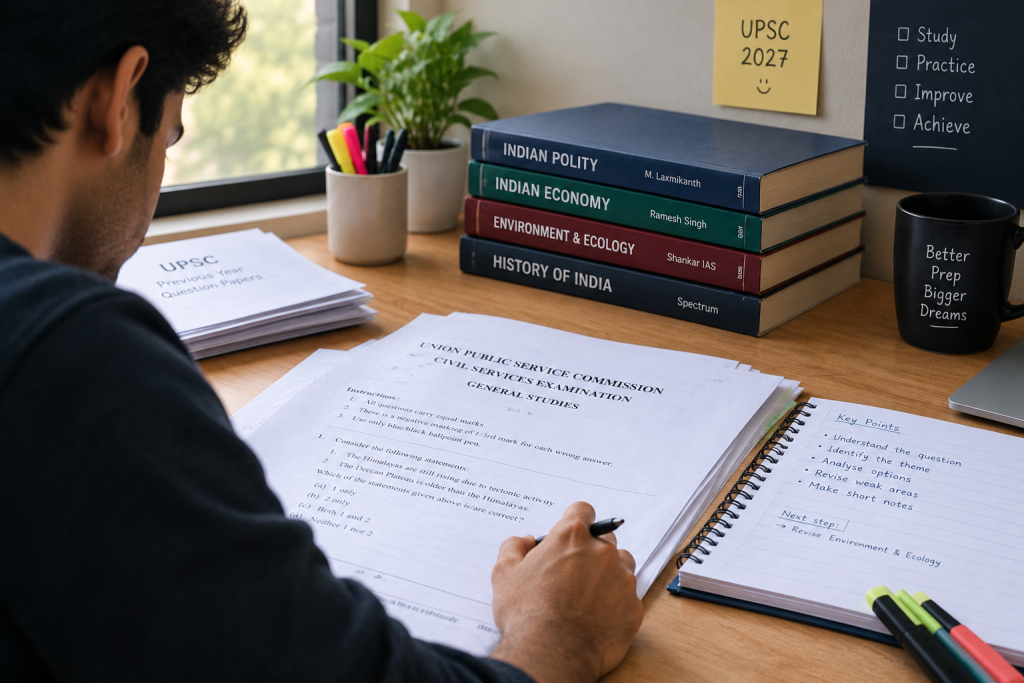
Why Are UPSC Previous Year Question Papers Important?
1. Learn the Exam Format
Previous papers give examples of the kinds of questions that come in UPSC Prelims and Mains. They help people get used to the way questions are asked the level of understanding needed and the difference between choice and long answer questions.
For Prelims students can see how multiple choice questions check facts, understanding and the ability to rule out answers. For Mains they can see how questions need explanations, analysis, comparisons and clear answers.
2. Find Key Topics and Themes
Looking at papers over years can show topics and bigger ideas that UPSC has asked about many times. For example someone might see questions that connect environment issues with events or link constitutional ideas with todays situations.
These patterns help in deciding what to study.. Just because a topic has come up before does not mean it will come up again. Students should use the papers to guide their study not to guess what will be asked.
3. Check Your Study Progress
Doing questions in the way as the exam helps students see how well they know a subject. Looking at answers is especially important because mistakes can come from not knowing enough mixing up ideas not reading the question carefully or not managing time well.
This process helps students know what to study instead of just going over things they already understand.
How to Look at UPSC Previous Year Question Papers Step by Step
Step 1: Get Official Papers
Start with papers that’re available on the official UPSC website. Separate the Prelims General Studies, CSAT and Mains papers by the stage of the exam and the subject.
Start with a number of papers and add more as you get more comfortable. Keeping them sorted by year makes it easier to see how you are doing.
Step 2: Do the Questions Before Checking Answers
Try to solve a paper or some questions before looking at the answer key. For Prelims try to do a paper in the time given.
For every question write down if your answer was right, wrong or a guess. This is important because a guess that was right may still show that you don’t fully understand the topic.
Step 3: Sort Questions by Subject and Topic
Group the questions under subjects like History, Geography, Polity, Economy, Environment and Science and Technology. For Mains sort them by General Studies paper, Essay or optional subject.
Under each subject find themes. For example Polity questions might be about Parliament, fundamental rights or federalism.
This way of sorting helps you see which areas need work.
Step 4: Find Out Why Each Answer Is Right
Don’t stop after checking the answer. Go back to your books. Study materials to find out the idea behind the answer.
For answers ask yourself:
Did I get the idea wrong?
Did I miss a fact or rule?
Did I read the question wrong?
Was my way of eliminating options
Did I guess without a reason?
Write down what you learned from each mistake. This makes every practice session a chance to learn.
Step 5: Look at the Words in the Questions
UPSC questions often need reading. Pay attention to words like “only ” “always ” “correct,” and “incorrect.” In questions with statements check each one on its own before choosing an answer.
For Mains look at the words used in the question. Words like “discuss,” “examine,” “analyse,” and “critically evaluate” mean things. Knowing these helps you prepare answers that match the question.
Step 6: Keep a Record of Your Analysis
Make a notebook or spreadsheet to write down what you find. Include the year, subject, topic your answer, the answer why you were wrong and what you need to do next.
For example if you often get questions about constitutional bodies study those ideas again and do more questions on them.
Check this notebook often especially when you are revising.
How to Use the Papers for UPSC Prelims
For Prelims focus on knowing the ideas being accurate and making choices. After doing the questions go back. Study the ideas behind both the right and wrong answers.
Practise removing options when you have a good reason to do so. Keep track of how you are doing and watch out for negative marking when looking at mock test results.
Don’t just memorise the answers from old papers. The same idea may come up in a way or in a new situation.
How to Use the Papers for UPSC Mains
Mains needs care with how answers are written. Look at how questions connect parts of a topic like social economic, political and environmental aspects.
Practise writing answers in the time given. A good answer usually has an intro, clear main points and a conclusion.
After writing check if you followed the instructions covered the points gave examples and stayed within the word limit.
The papers can also help you see where your notes are missing things and help you write answers.
Common Mistakes to Avoid When Looking at Papers
Doing Questions and Not Checking Mistakes
looking at your score does not explain why you lost points. Spend time understanding why each answer was wrong.
Memorising Answers of Learning Ideas
Questions may be asked differently again. Understanding the ideas is more useful than remembering the right answer.
Predicting Exactly What Will Be Asked
Some topics come up often which can help in studying but you can’t be sure what will be in the exam. Keep an approach to covering the whole syllabus.
Not Practising CSAT or Mains Answers
Don’t only focus on General Studies Prelims. Do CSAT practice and Mains answer writing as needed.
Using Many Books and Materials
Switching between many books can make studying less effective. Use the papers to find where you need knowledge then go to trusted resources to learn.
A Simple Weekly Routine to Use the Papers
A plan can help people use the papers regularly:
Day 1: Try some questions from one subject.
Day 2: Check answers. Understand where you went wrong.
Day 3: Study the ideas behind the answers.
Day 4: Try questions from the same subject.
Day 5: Look at the way questions are asked and update your notebook.
Day 6: Practice writing answers for Mains or do CSAT questions based on your needs.
Day 7: Review what you learned and plan what to study
Adjust this plan to fit your time how much you have studied and where you are in your preparation. Consistency and real learning matter more than doing a lot of questions without thinking.
Frequently Asked Questions
1. How years of UPSC Previous Year Question Papers should I do?
Start with a few recent papers and add more as you go. Looking at years helps you see patterns but the way you study the papers is more important than how many you do.
2. Should new students do the papers before finishing the syllabus?
Yes. Beginners can look at the papers early to see what the exam expects. They may find some questions hard at first so they should use the papers as a guide. Come back to them when they know more.
3. Are the papers enough for preparation?
No. The papers are very useful. They need to be used with studying the syllabus using good books following current events doing revision taking mock tests and writing answers.
4. How should I look at answers?
Find out why each mistake happened study the idea and do similar questions. Keeping track of mistakes helps you focus on the areas you need to work on.
5. Can the papers help with writing answers for Mains?
Yes. Mains papers help students see what the questions are asking practice writing answers find different parts of a topic and get better at answering directly.
Conclusion
UPSC Previous Year Question Papers work best when students use them to learn check their progress and review not as practice tests. By grouping questions understanding ideas checking mistakes and keeping a plan students can make their study more focused and better organised.
A smart way to use the papers can help students build ideas and feel more confident for both Prelims and Mains. With practice and covering the whole syllabus these papers can become a key part of a good UPSC preparation plan.
At Gallant IAS students can use a focused approach to build better understanding and get ready, for the Civil Services Examination.